
 Svenska
 Deutsch


Cart
Your cart is empty, but doesn't have to be..
Your cart is empty, but doesn't have to be..
Costa Rica · March 2025
When TADAH kafferosteri turned five, we did something we had wanted to do for a long time: we travelled to Costa Rica to see coffee growing at its source. In Lenhovda, we work with green coffee beans and roasting. In Costa Rica, we got a closer look at the steps that come before our work begins.
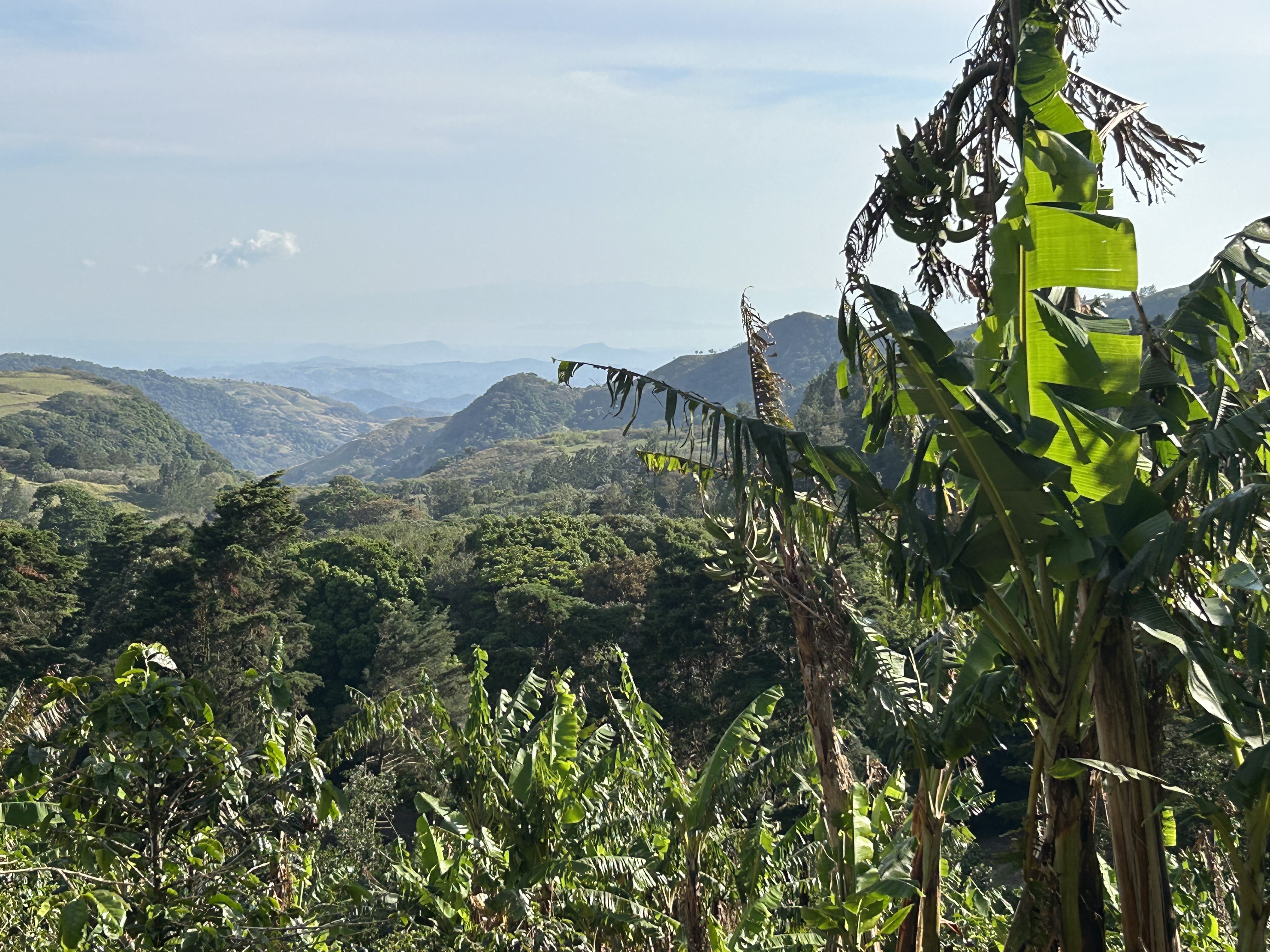
A landscape in one of Costa Rica’s coffee-growing regions.
Hacienda Doka · the coffee cherry
At Hacienda Doka, our visit began among coffee plants of different ages. We saw coffee cherries ripening on the branches and tasted one straight from the plant for the first time. The pulp was sticky, but delicious. A small detail – and at the same time, a completely new way for us to experience coffee before it becomes a bean.
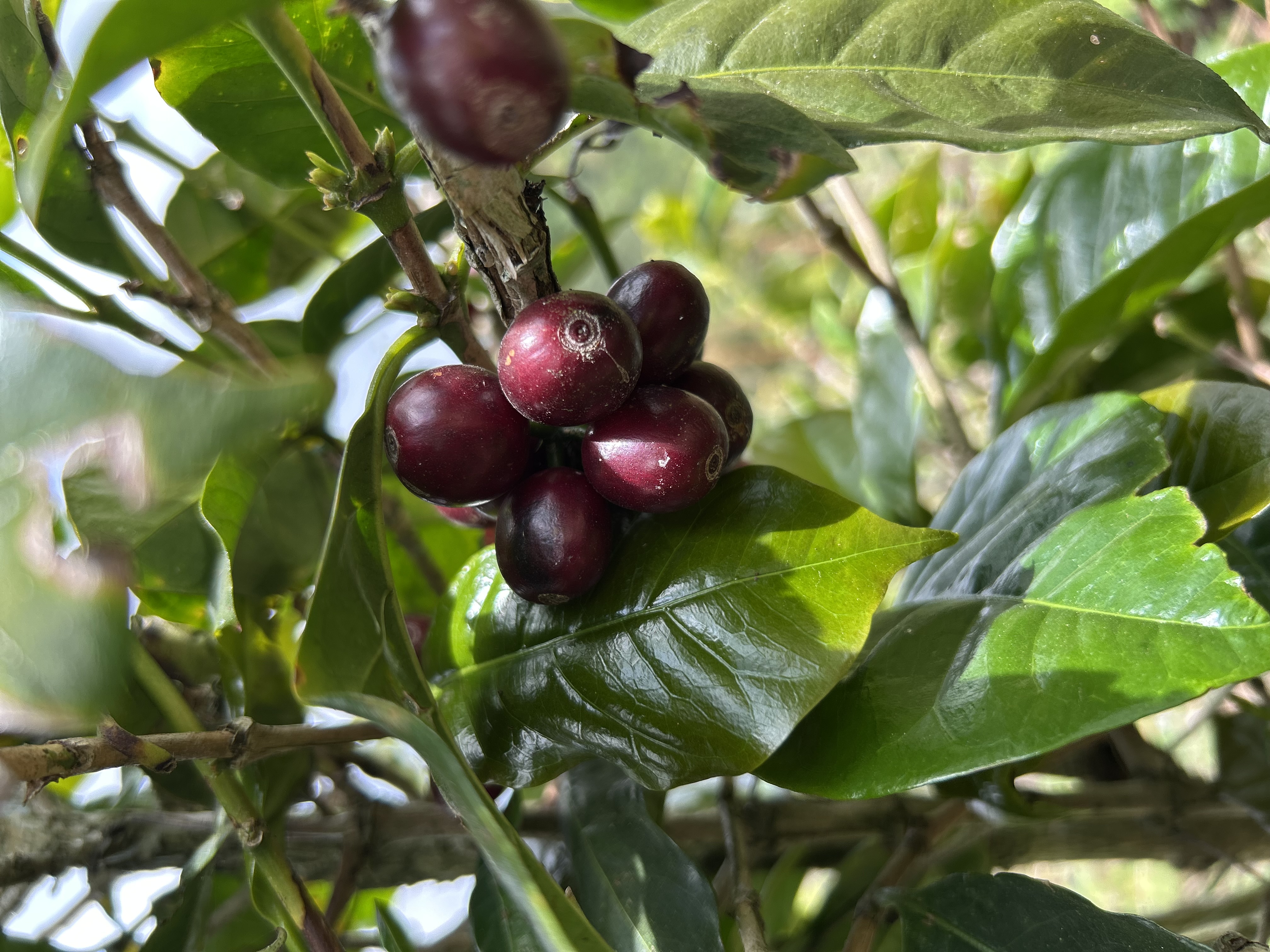
Coffee cherries ripening on the branch.
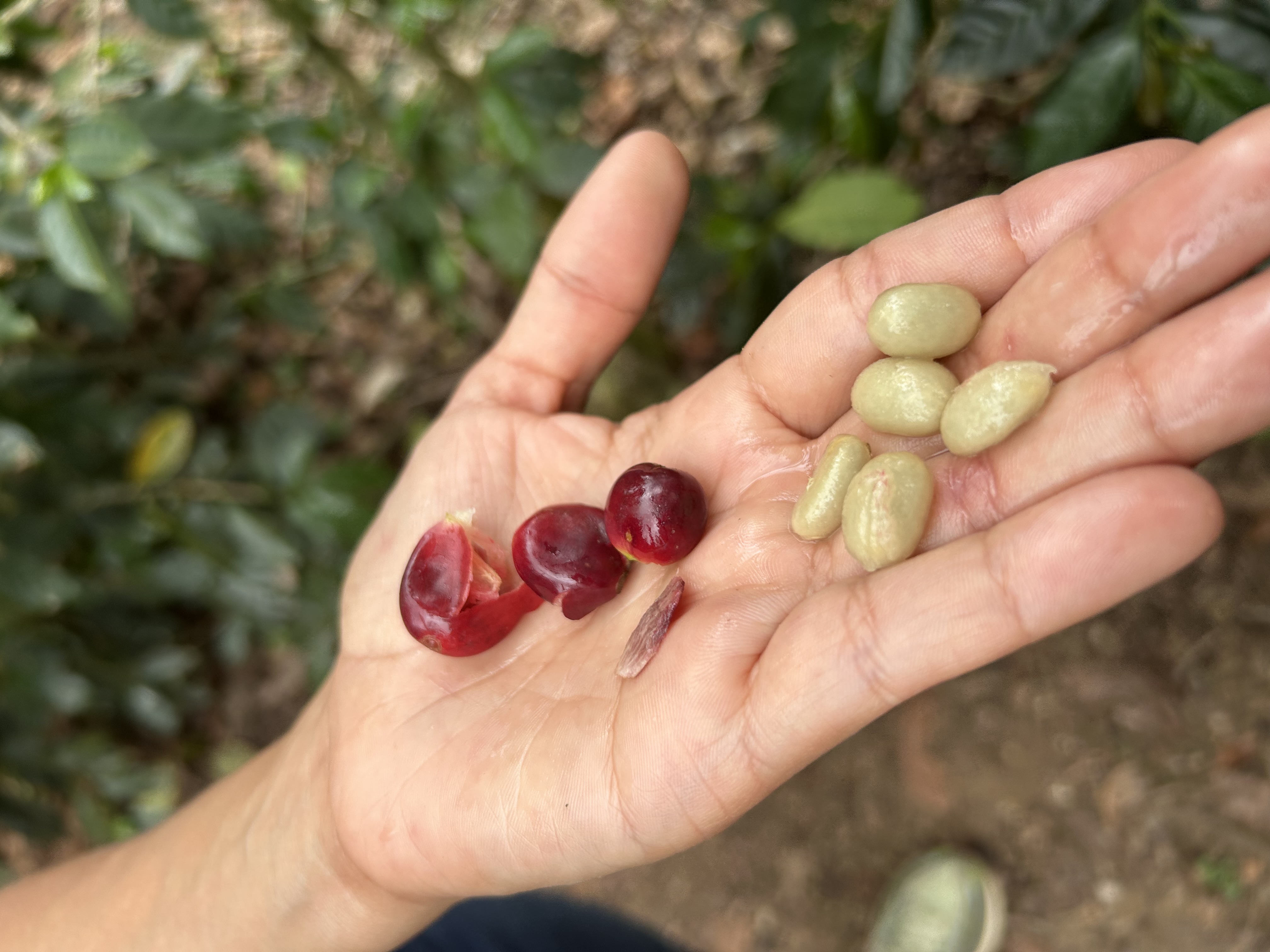
From coffee cherry to green bean.
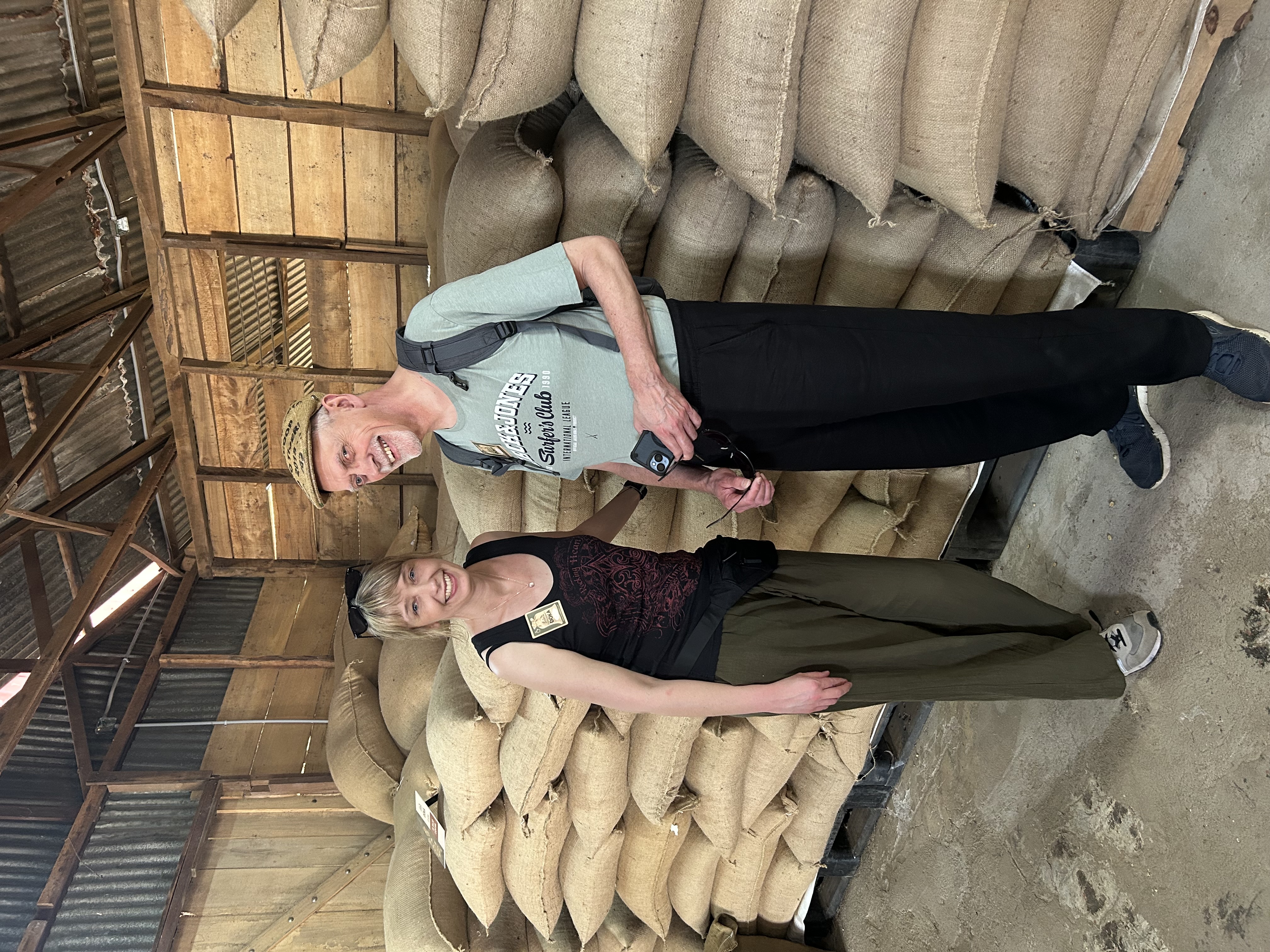
At Hacienda Doka, among the coffee sacks.
Under the red skin is the coffee cherry’s pulp. Closest to the beans is a thin, sticky layer called mucilage. The beans are then enclosed in a parchment-like layer and a thin silver skin. Once the outer layers have been removed, what remains are the green coffee beans that we later roast in Lenhovda.
The skin and pulp of the coffee cherry can also be put to use. Once dried, they can be used to make cascara – a fruity tea made from coffee cherries. Our cascara comes from Hacienda Sonora in Costa Rica.
Discover our CascaraTarrazú · Finca Las Mercedes
In Tarrazú, we visited Finca Las Mercedes, where Mella showed us around. The family has farmed this land for generations and has been growing coffee here for around 60 years.
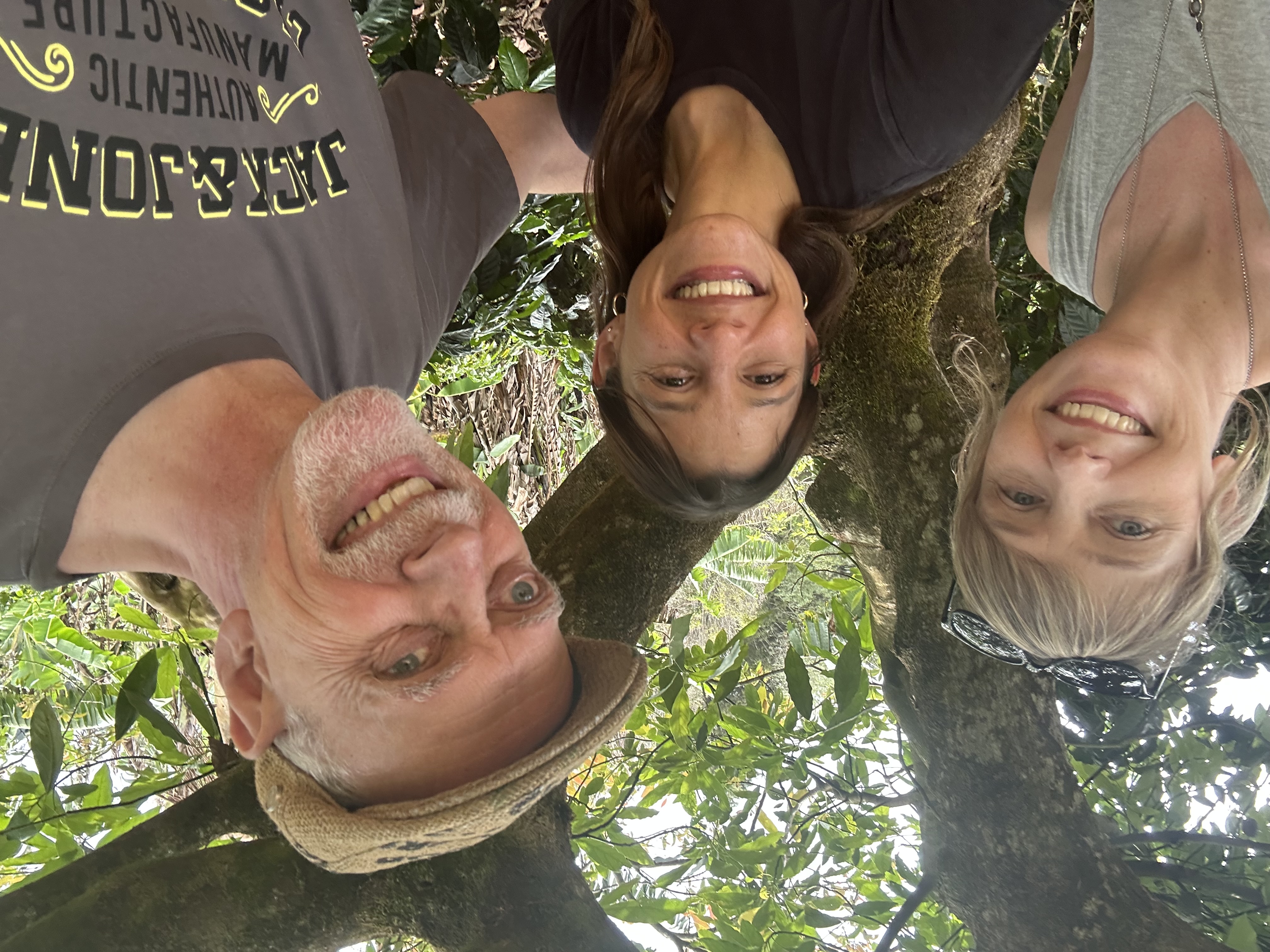
Mella showed us around the family farm.
Mella told us about two major challenges: a changing climate and the difficulty of finding enough people to work the harvest. The coffee cherries are picked by hand. Many seasonal workers come from Nicaragua and Panama. Providing accommodation, meals and longer contracts is part of the farm’s effort to create good conditions for them.
When you see coffee growing on steep mountain slopes and think of the cherries being picked by hand in hot, humid conditions, the scale of the work becomes clear.
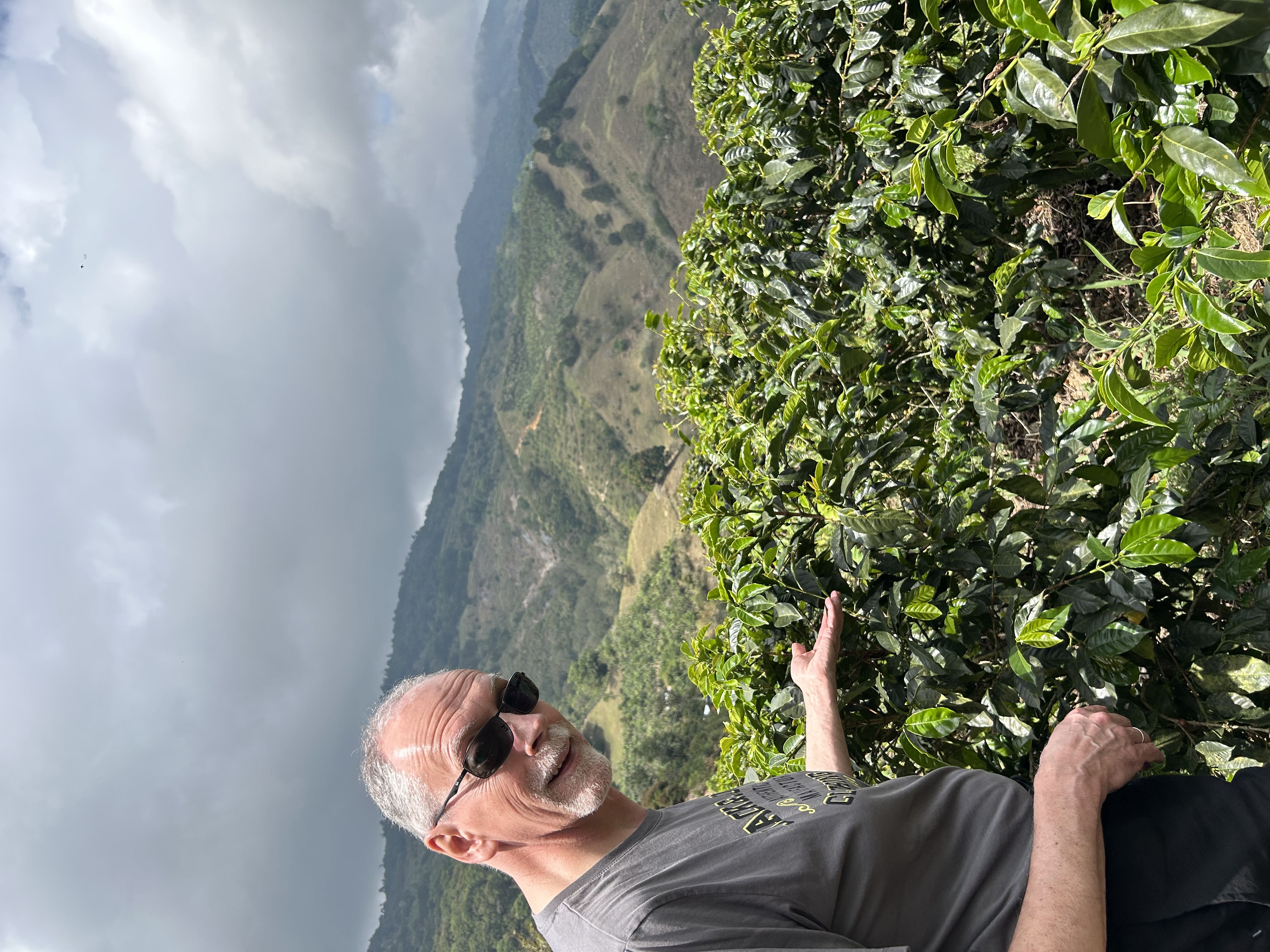
Michael among the coffee plants.
Standing right in the middle of the farm made it easier to understand the work behind every harvest. The coffee cherries are picked one by one by hand, often on steep slopes and in warm, humid air.
Cordillera de Fuego · after the harvest
At Cordillera de Fuego, we visited a beneficio – a facility where coffee is processed after the harvest. We saw the machinery used in processing and the raised drying beds where the coffee is left to dry. It gave us a clear picture of how many steps lie between the harvest and finished green coffee.
At the farms, we also saw that coffee can be processed in different ways. The method affects how the coffee dries and the character it develops.
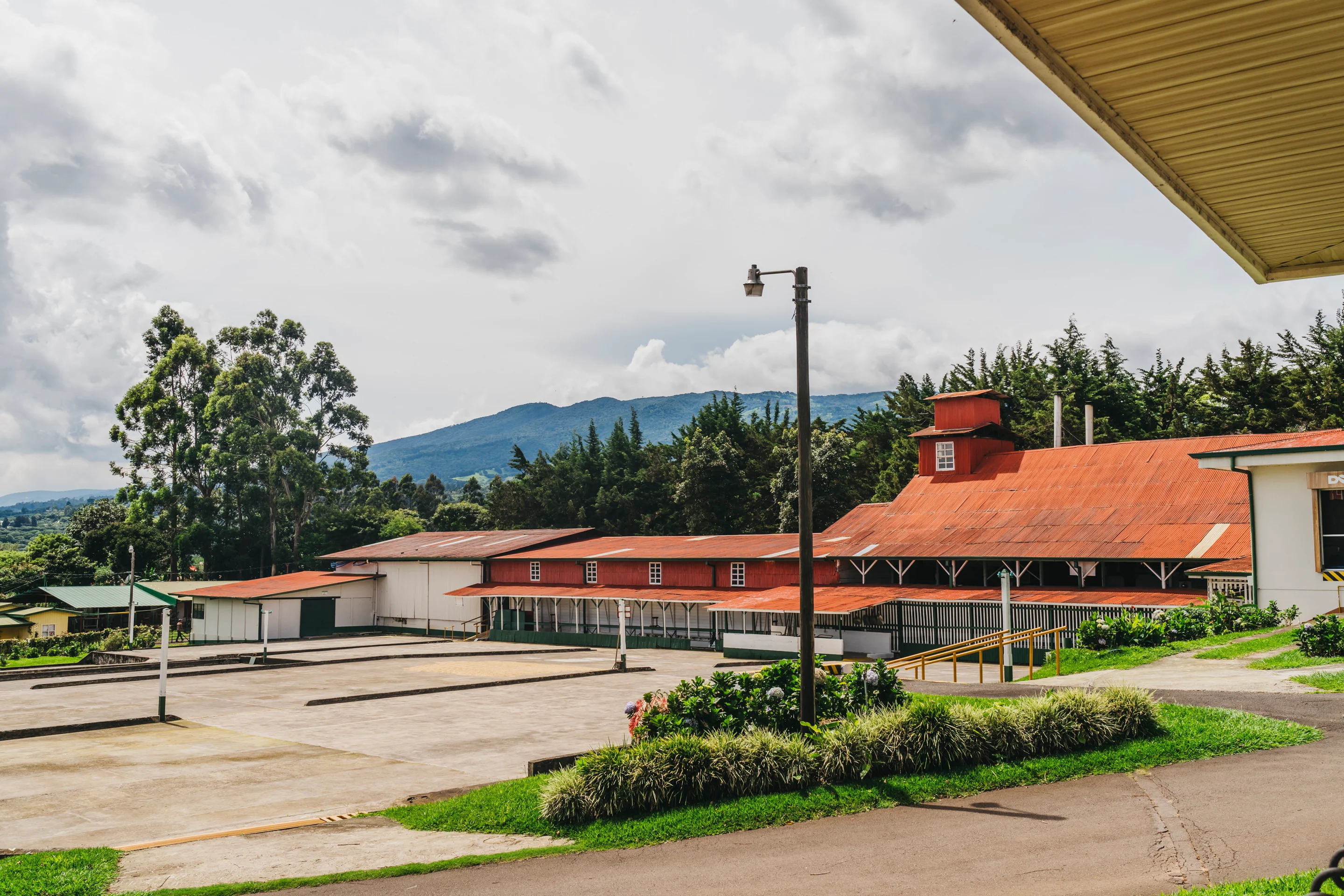
One of the facilities we visited.

The machinery at Cordillera de Fuego.
The coffee on the drying beds needs to be turned regularly so that it dries evenly. Michael got to try turning it with a wooden rake. It looked simple, but the work quickly became tiring in the hot, humid air. It was a clear reminder of how much physical effort it takes to dry coffee evenly.
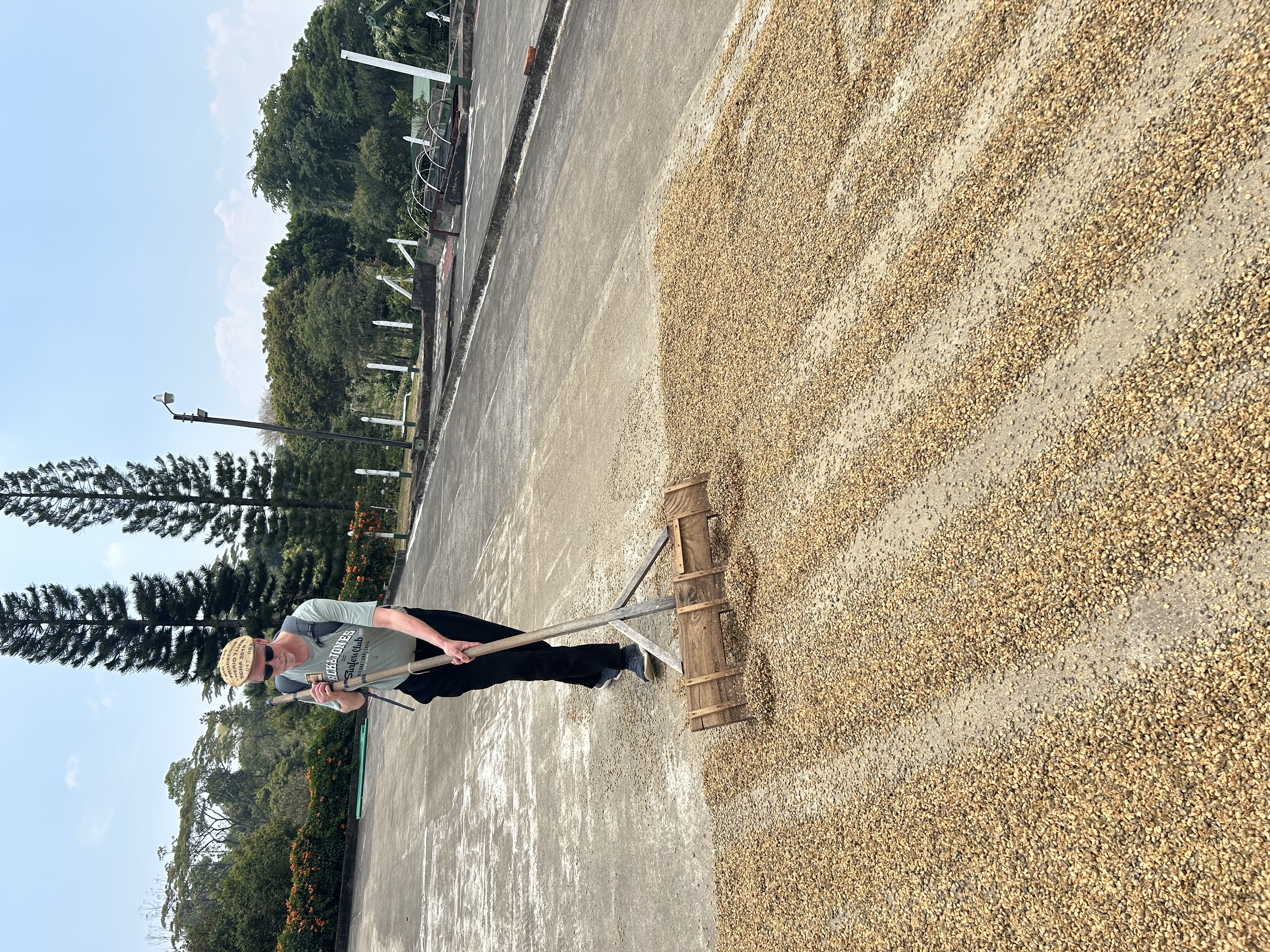
The coffee is turned by hand as it dries.
Processing · three methods
After the harvest, the coffee must be processed and dried. Here are three common methods – and what makes them different.
The pulp is removed and the beans are washed to remove the sticky layer before they are dried. This method often produces a clean, distinct flavour.
The pulp is removed, but some of the sticky layer is left on the beans as they dry. This can contribute sweetness and body.
The whole coffee cherry is dried with the bean still inside. As it dries, the bean is influenced by the surrounding fruit, which can give the coffee a fruitier character.
Fermentation can be part of several processing methods and managed in different ways. Time, temperature and other conditions affect the process – and help give each batch its own character.
Monteverde Coffee · new approaches
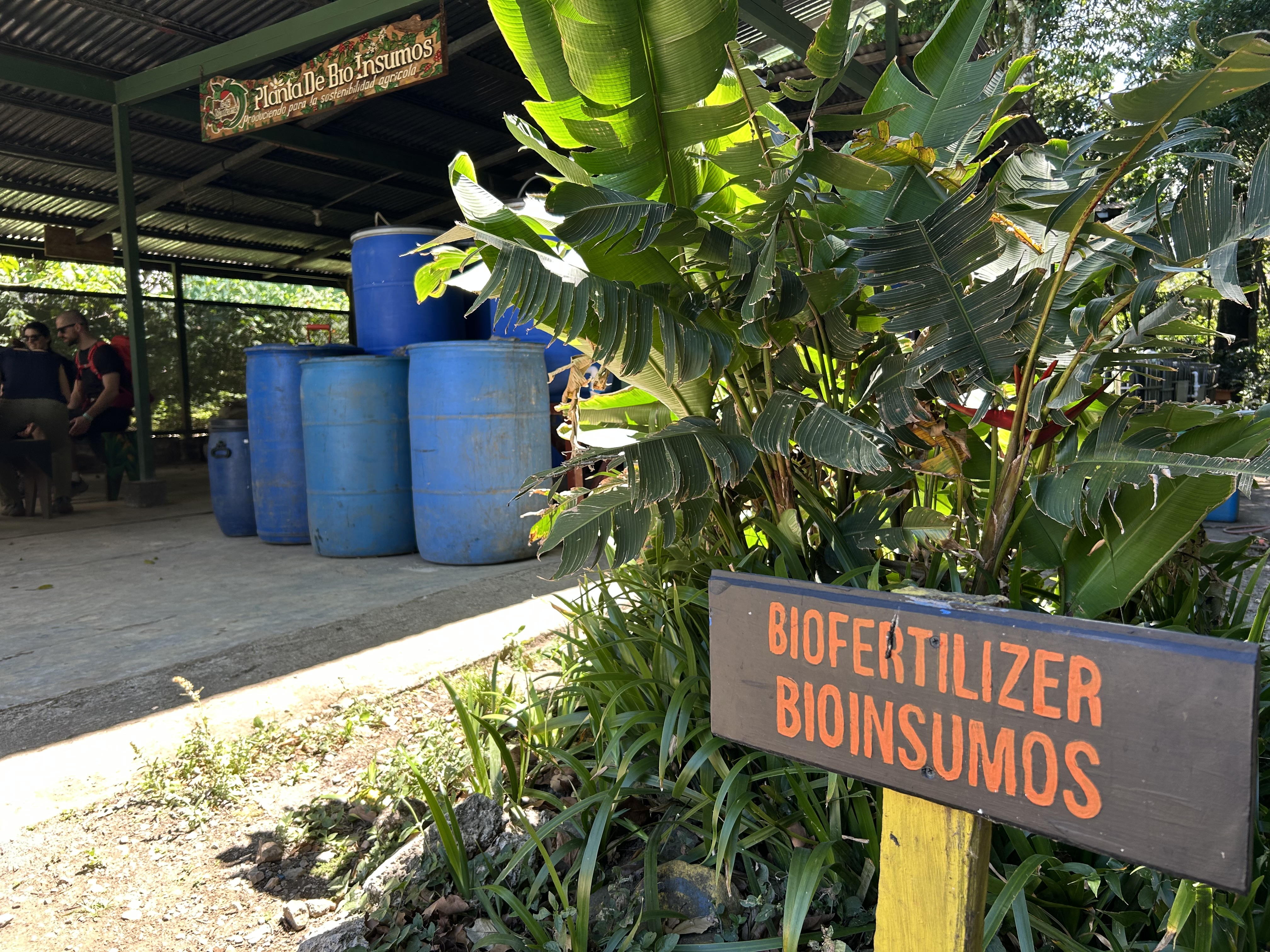
At Monteverde Coffee, they also make their own biofertiliser.
At Monteverde Coffee, we got a glimpse of a different kind of work. They have a small laboratory where they experiment with making biofertiliser. The farm also has animals that are part of their work to develop solutions of their own.
A traditional brewing method
We also took part in a coffee experience featuring the chorreador, Costa Rica’s traditional brewing method. Coffee is filtered through a cloth bag held in a simple wooden frame. It brought the ingredients and the craft together in the cup – and we brought a chorreador home to Småland.
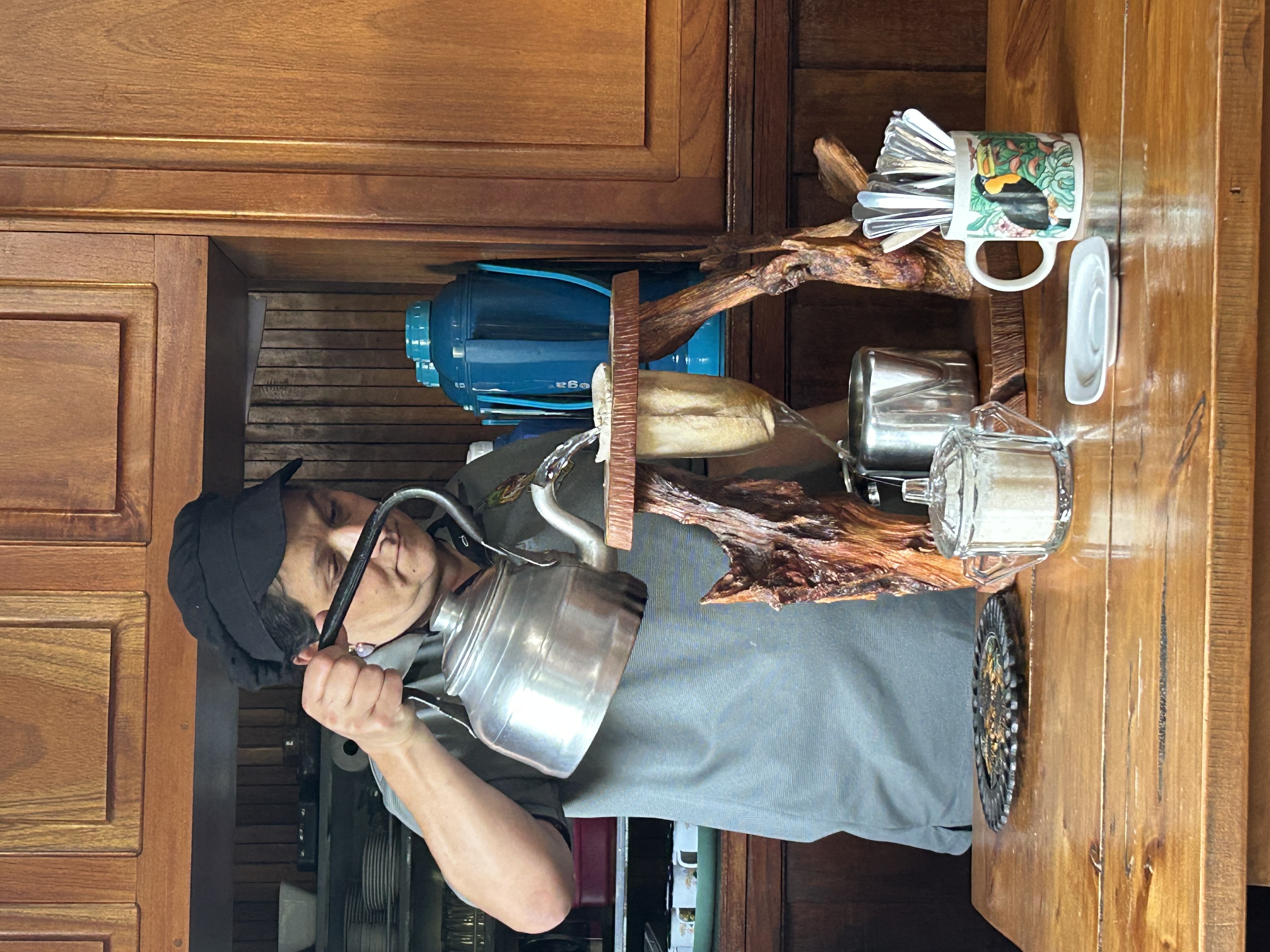
Chorreador – a simple, traditional brewing method.
The farms sell coffee in volumes equivalent to entire containers, so we couldn’t buy coffee from the specific farms we visited. But we came away with a closer understanding of the work behind the green beans.
By the time coffee reaches Lenhovda, many hands and many decisions have already shaped the raw material. That is where our work begins – getting to know the coffee and bringing out its best qualities through roasting.
Join us on the coffee farms and see some of the steps we describe here – from coffee cherries on the branches to the work that follows the harvest.