
 Svenska
 Deutsch





Cart
Your cart is empty, but doesn't have to be..
Your cart is empty, but doesn't have to be..
TADAH kafferosteri |3/11, 2025
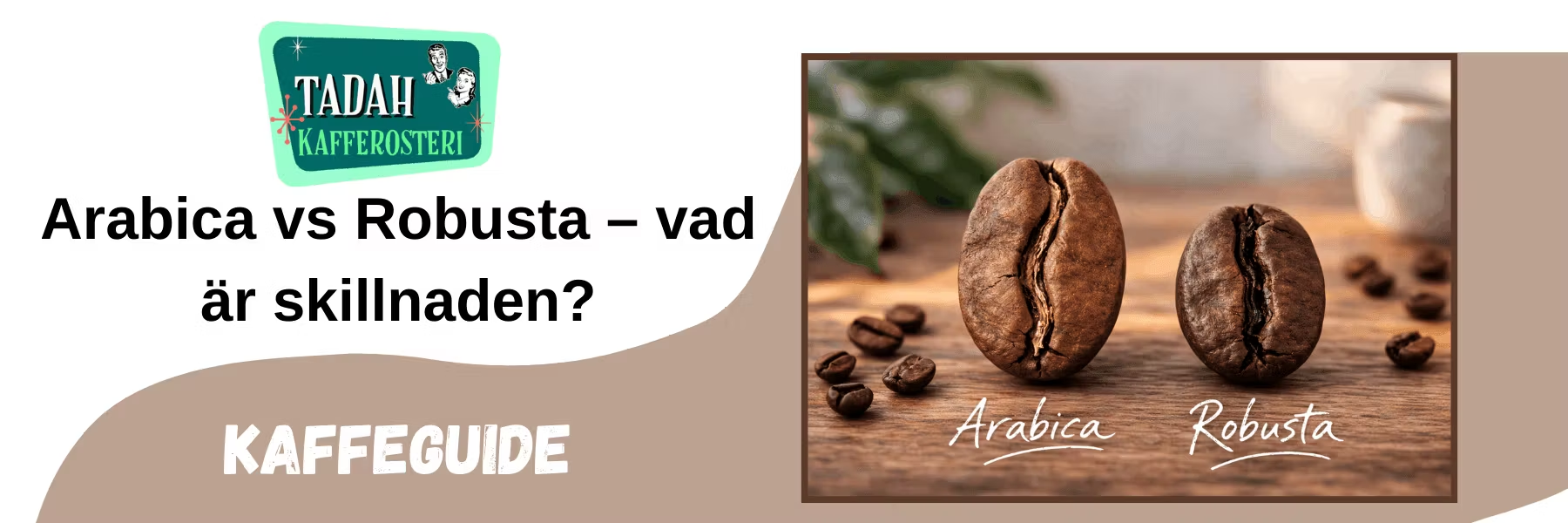
Most coffee beans in the world come from two main species: Arabica and Robusta. But what exactly is the difference between them – and why is Arabica so often mentioned in connection with specialty coffee?
The differences mainly come down to flavor, caffeine content and how the coffee is grown. In this guide, we explain what distinguishes these two coffee species and how they influence the taste in your cup.
Arabica is the most widely grown coffee species in the world and accounts for about 60–70% of global coffee production.
Arabica is usually grown at higher altitudes and in cooler climates, which allows the coffee beans to develop more complex aromas.
Arabica coffee is often characterized by:
a smoother and more balanced flavor
more complex aromas
fruity, floral or chocolatey notes
This is also why most specialty coffees are made from 100% Arabica.
At our roastery we work almost exclusively with Arabica beans because they often provide a greater variety of flavors. For example, coffees from Ethiopia can be fruity and floral, while coffees from Central America are often more chocolatey and balanced.
Robusta is a hardier coffee species that tolerates warmer climates and lower altitudes better than Arabica.
It is often easier to cultivate and produces larger harvests, which means it is sometimes used in lower-cost coffee blends.
Robusta coffee typically has:
a stronger and more intense flavor
more bitterness
higher caffeine content
a fuller body
Robusta is sometimes used in espresso blends, as it can contribute more body and a thicker crema in the cup.
One of the biggest differences between Arabica and Robusta is the caffeine level.
Robusta contains roughly twice as much caffeine as Arabica.
The higher caffeine content often makes the taste stronger and more bitter. At the same time, caffeine acts as a natural defense mechanism for the coffee plant, making Robusta more resistant to pests.
There is no simple answer to which coffee bean is best – it largely depends on personal preference.
Arabica is often appreciated for its more complex and nuanced flavor, while Robusta can add strength and body to certain coffee blends.
In specialty coffee, the focus is usually on Arabica, since the beans can express clearer flavor profiles depending on origin, altitude and processing.
Most specialty coffee roasteries work almost exclusively with Arabica beans because they have a greater potential to develop complex aromas.
When we taste coffees at the roastery, we often notice how much the origin can influence the flavor. A coffee from Ethiopia may have bright notes of berries and citrus, while coffees from Colombia or Guatemala often have a rounder and more chocolatey profile.
It is exactly this variation that makes specialty coffee so exciting.
Not necessarily. Arabica is often appreciated for its more complex flavor, but Robusta can contribute strength and body in certain blends, especially for espresso.
The Robusta plant produces more caffeine as a natural defense against pests. This makes it more resistant and easier to grow than Arabica.
Most specialty coffees are made from 100% Arabica, because these beans typically offer more complex aromas and clearer flavor profiles.
Arabica is usually grown at higher altitudes in cooler climates, while Robusta is typically cultivated at lower altitudes in warmer regions.
At our roastery in Småland we roast coffee in small batches.
Here you can find our full range of coffee beans.