
 Svenska
 Deutsch




Cart
Your cart is empty, but doesn't have to be..
Your cart is empty, but doesn't have to be..
TADAH kafferosteri |13/03, 2026
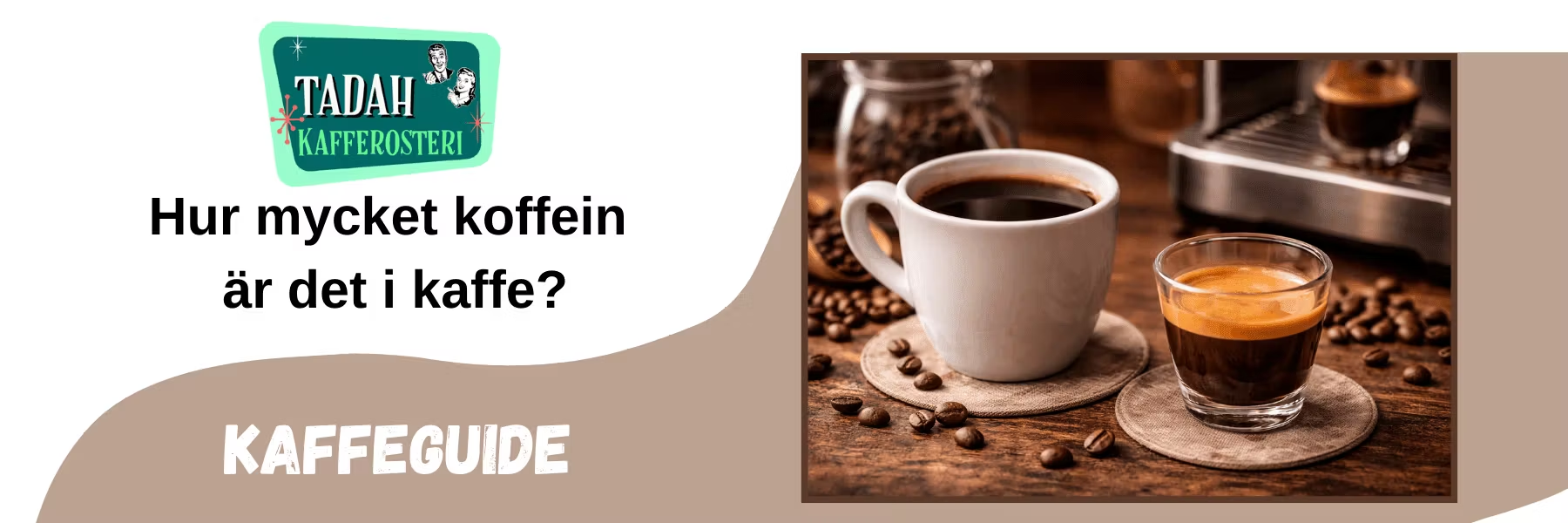
Caffeine is a natural compound found in coffee beans and responsible for coffee’s stimulating effect. But how much caffeine does a cup of coffee actually contain?
The answer depends on several factors, such as the brewing method, the coffee bean, and the amount of coffee used. In this guide we explain how caffeine levels can vary and what influences the amount of caffeine in your cup.
A regular cup of filter coffee of about 200–240 ml usually contains roughly:
80–120 mg of caffeine
The exact amount can vary depending on:
how much coffee is used
which coffee bean is used
how the coffee is brewed
A stronger brew or more coffee in the filter can therefore result in more caffeine in the cup.
Espresso contains more caffeine per milliliter than filter coffee because it is more concentrated.
A single espresso (about 30 ml) usually contains approximately:
60–80 mg of caffeine
However, since the cup is much smaller than a regular cup of coffee, the total caffeine content is often similar.
It is therefore a common misconception that espresso always contains more caffeine than regular coffee.
Several factors influence how much caffeine ends up in your cup.
The two most common coffee species are Arabica and Robusta.
Robusta typically contains about twice as much caffeine as Arabica.
That is why many specialty coffees, which are often made from Arabica beans, can taste somewhat milder.
If you want to learn more, you can also read our guide about the difference between Arabica and Robusta.
The brewing method can also influence caffeine levels.
For example:
Filter coffee → often more caffeine per cup
Espresso → more concentrated but smaller serving
French press → can also result in relatively high caffeine levels
If you want to learn more about brewing, you can also read our guide How much coffee per cup?
The more coffee you use when brewing, the more caffeine can be extracted.
That is why it is important to use the correct coffee-to-water ratio to achieve a balanced cup.
Many people believe that dark roast coffee contains more caffeine than light roast coffee. In reality, the difference is quite small.
Caffeine does not break down significantly during roasting. However, darker roasted beans weigh slightly less, which can sometimes make the caffeine per scoop slightly different.
In practice, brewing method and coffee amount have a greater influence on caffeine levels than the roast level.
A typical cup of filter coffee contains about 80–120 mg of caffeine, depending on brewing and coffee amount.
Espresso is more concentrated, but because the serving size is smaller, a shot of espresso often contains roughly the same amount of caffeine as a cup of filter coffee.
Robusta coffee generally contains more caffeine than Arabica.
Roasting mainly affects flavor. The difference in caffeine between light and dark roasts is usually quite small.
Want to learn more about coffee? You may also enjoy these guides:
What is the difference between filter coffee and espresso
How much coffee per cup
Arabica vs Robusta – what’s the difference
At our roastery in Småland we roast coffee in small batches.
Here you can find our full range of coffee beans.