
 Svenska
 Deutsch





Cart
Your cart is empty, but doesn't have to be..
Your cart is empty, but doesn't have to be..
TADAH kafferosteri |9/02, 2026
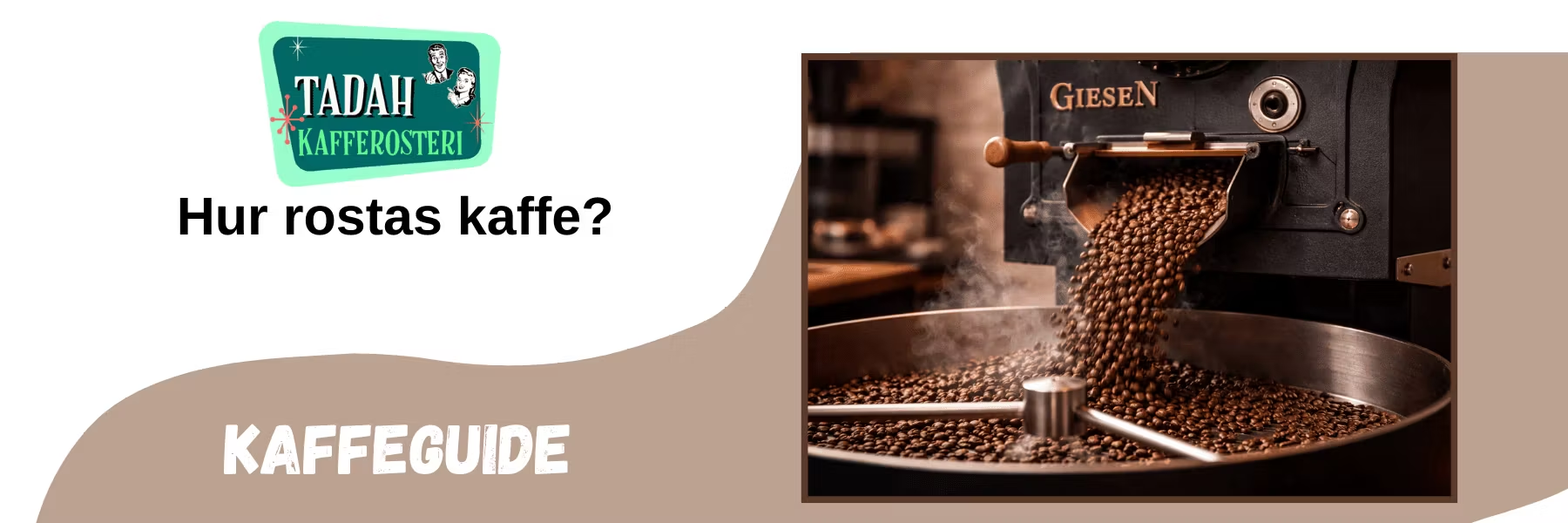
Coffee roasting is the process that transforms green coffee beans into the aromatic beans we use to brew coffee. It is during roasting that coffee develops its flavor and aroma.
Roasting is therefore one of the most important steps in coffee’s journey from bean to cup. Small changes in temperature and time can have a large impact on the final taste.
In this guide, we explain what happens when coffee is roasted, how different roast levels affect flavor and how we work with roasting in our roastery.
When coffee beans are roasted they are exposed to high temperatures, usually between 180 and 220 °C.
During roasting a series of chemical reactions take place, including the Maillard reaction, which creates many of the aromas found in coffee.
As the beans roast, several changes occur:
the beans change color from green to brown
moisture inside the beans evaporates
the beans expand and become lighter
hundreds of aromatic compounds develop
This is why green coffee has almost no aroma, while roasted coffee has a rich and complex fragrance.
The roast level has a strong influence on how coffee tastes in the cup.
Light roasted coffee beans are roasted for a shorter time and at slightly lower temperatures.
This often results in:
clearer origin characteristics
higher perceived acidity
fruity or floral aromas
Light roasting is often used for coffees where the goal is to highlight the origin and terroir of the coffee.
Medium roast is one of the most common roast levels and often produces a balanced flavor profile.
Medium roast coffee is often characterized by:
balanced acidity
rounder body
notes of chocolate, nuts or caramel
At our roastery we often roast coffee to a medium roast because it provides a good balance between the coffee’s origin character and a full, rounded flavor.
Dark roast involves longer roasting and higher temperatures.
This often produces:
lower perceived acidity
more body
stronger roasted notes such as chocolate, caramel or sometimes a smoky character
With very dark roasting, the roast flavor can become more dominant than the coffee’s original characteristics.
Many specialty coffee roasteries, including us at TADAH kafferosteri, roast coffee in small batches.
This makes it possible to:
adjust the roast profile for each coffee
control temperature changes during the roast
highlight the unique flavor profile of each coffee
Every origin and every bean reacts slightly differently during roasting, so roasting often involves finding the right balance for each specific coffee.
In industrial coffee production, coffee is often roasted faster and at higher temperatures to produce large volumes.
After roasting, the beans may sometimes be cooled quickly using water or steam, which can affect the structure of the beans.
In smaller roasteries, roasting is usually slower and more controlled, and the beans are typically cooled with air instead. This gentler roasting process can help develop the coffee’s aromas more evenly.
Coffee beans naturally contain several different acids, including chlorogenic acids.
During roasting some of these acids break down, especially during longer or more developed roasts. This is one reason why darker roasts are often perceived as less acidic.
At the same time, the coffee’s origin and brewing method also influence how acidity is experienced in the cup.
After roasting, coffee usually needs to rest for a few days before brewing. During this time the beans release carbon dioxide and the flavor stabilizes.
For this reason, many roasteries recommend using coffee a few days after roasting, while it is still relatively fresh.
For the best flavor it is also recommended to:
use whole coffee beans
grind the coffee just before brewing
Yes, it is possible to roast coffee at home, but it requires some practice and the right equipment.
Some coffee enthusiasts roast small amounts of coffee using methods such as:
a frying pan
an oven
a small home roaster
This can be a fun way to experiment with coffee, but it is often difficult to achieve consistent results.
In a professional roastery, special roasting machines are used where temperature and airflow can be carefully controlled. This allows the coffee’s aromas to develop more precisely and results in a more consistent roast in every batch.
For most coffee lovers, the easiest way to enjoy great coffee is simply to buy freshly roasted coffee from a roastery.
Light roast often highlights the coffee’s origin and fruity aromas, while dark roast creates more body and stronger roasted flavors.
Green coffee beans have almost no flavor. The roasting process is what develops the aromas and flavors we associate with coffee.
Many coffees taste best about 2–7 days after roasting, once the beans have released some of the carbon dioxide.
In general, yes. Freshly roasted coffee often has more aroma and complexity than coffee that has been stored for a long time.
At our roastery in Småland we roast coffee in small batches.
Here you can find our full range of coffee beans.